ValEUs Interactive Database
Civil society initiatives counteracting contestations of EU values
Civil Society EU Engagement Visualisations
Welcome to the Interactive Database visualising civil society initiatives.
This interactive database visualises the different ways in which civil society organisations in Europe and beyond counteract contestations to EU values, including freedom, democracy, equality, the rule of law, and human rights. Connecting the networks of the several members of the ValEUs Network, the database displays a variety of civil society actors and stakeholders that, through their initiatives, actively invest in peacebuilding, democratization, fundamental and human rights, sustainability, and responses to growing inequalities related to migration, trade, digitalization, conflict, and climate change in Europe. These initiatives address processes that negatively impact EU values and provide alternatives in circumstances marked by growing inequality, growing authoritarianism, power asymmetries, and human rights violations.
The interactive database aims to:
- inform researchers and policymakers about ongoing investments by civil society organisations to counteract contestations of EU values, thereby providing essential insights for future policymaking processes, and
- become a platform and database for civil society organisations working on similar projects intended to counteract violations of EU values. In this way, it provides entry points for networking, cooperation, and future project development.
Within this database, you can explore a Flow Map, a Sankey Diagram, and an Interactive Network Diagram. The Flow Map provides an overview of the geographical spread of civil society organisations, their action domains, and links to their websites. The Sankey Diagram illustrates the connections between organisations, action domains, and addressees by visualising flows of engagement. The Interactive Network Diagram shows connections between projects, action domains, addressees, countries, and organisations in the ValEUs dataset.
Explore the visualisations
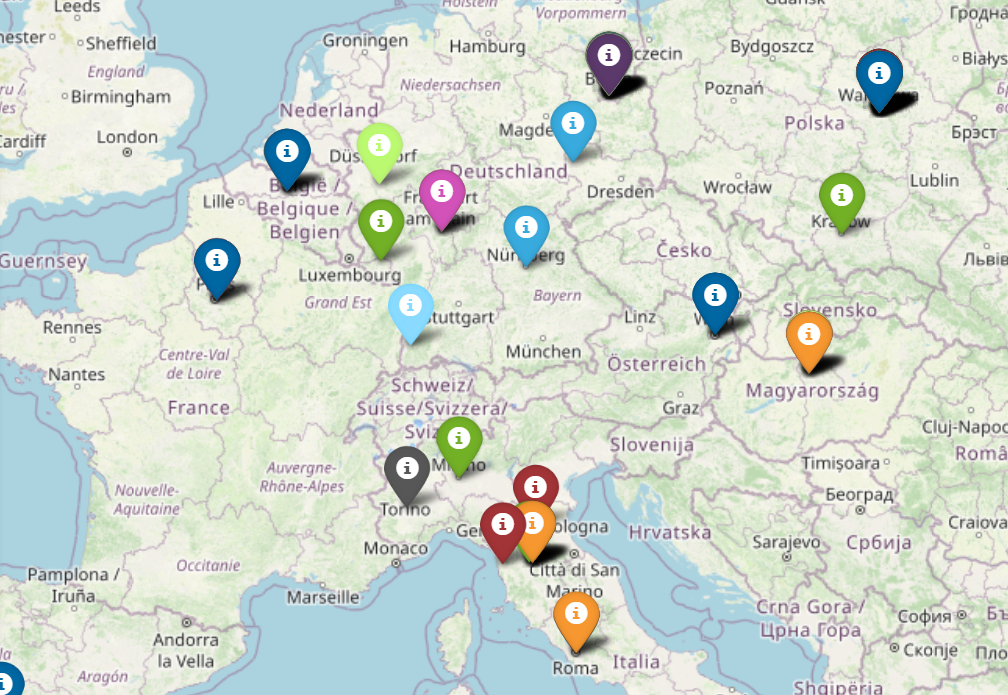
Geographical Spread and Action Domains
Overview of organisations, their action domains, and links to their websites; filter by action domains.
The flow map provides an overview of the geographical spread of the civil society organisations included in the database, their action domains, and a link to their website. Users can filter the map by action domain. Each action domain is represented by a distinct colour scheme, making it easier to identify patterns of engagement across countries and regions.
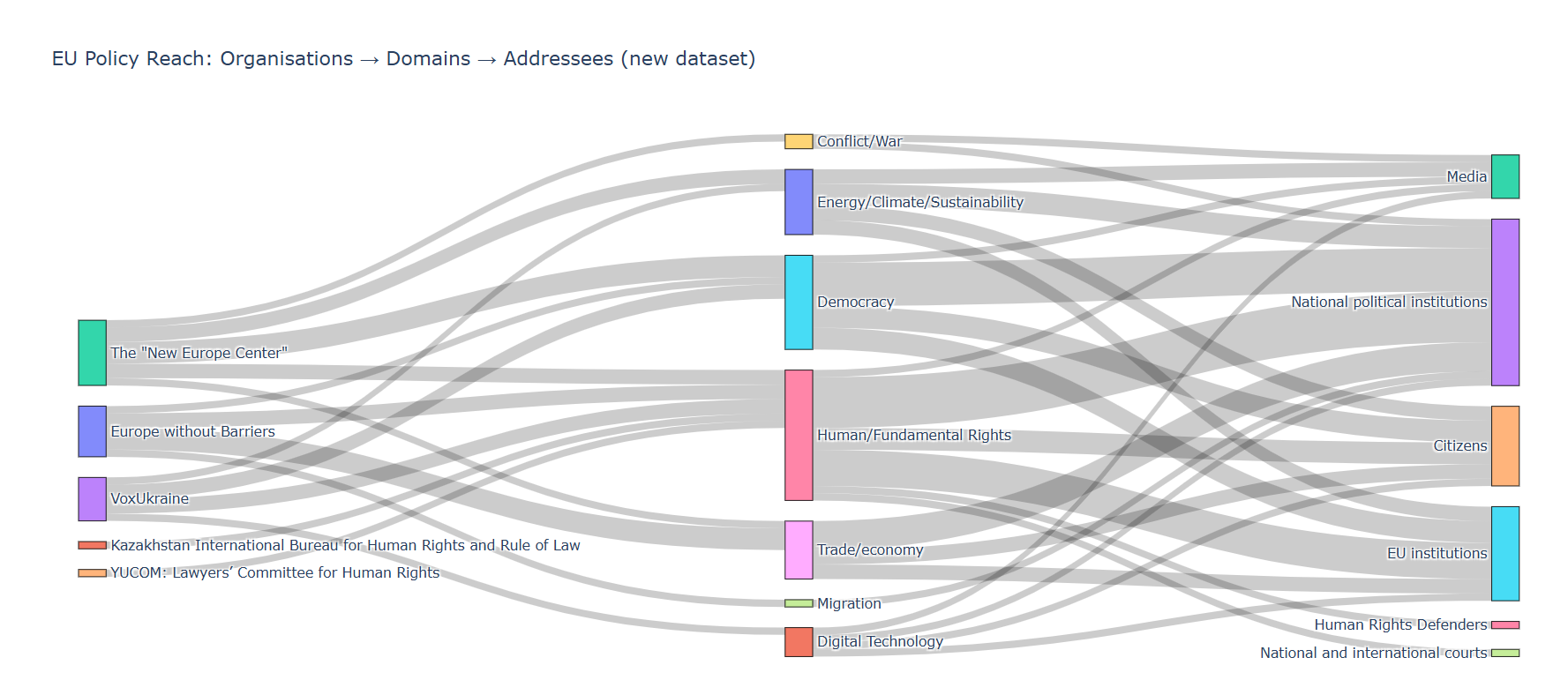
Flows of Engagement Across Actors
Visualises connections between organisations, action domains, and addressees; wider flows indicate stronger ties.
This diagram illustrates flows of engagement between organizations, action domains, and addressees.
Each node represents an actor or category, while the connecting flows show how these actors and categories are linked in the underlying dataset.
Wider flows indicate stronger or more frequent connections. This makes it possible to see where engagement is concentrated, which pathways dominate, and how activity branches or converges across the network. The Sankey diagram thus emphasizes the magnitude of relationships and the distribution of connections across stages.
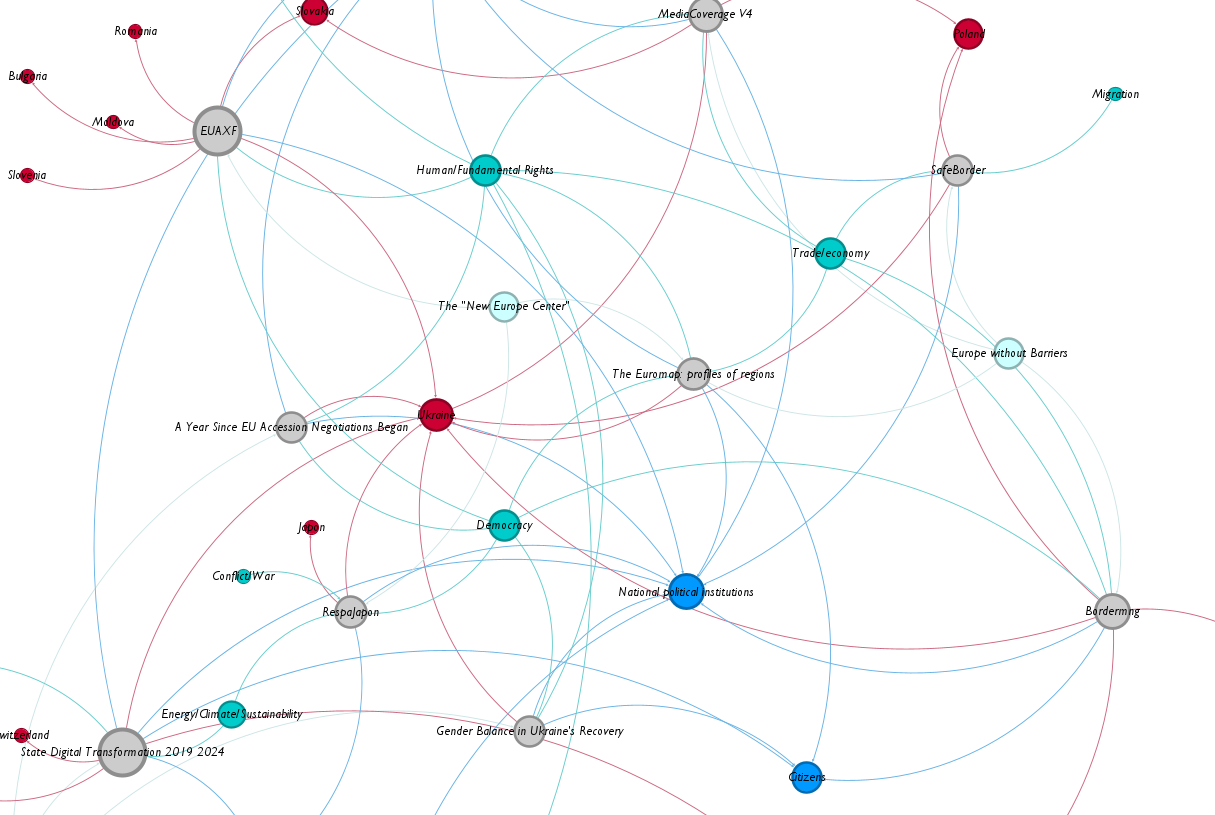
Network Structure and Collaboration Clusters
ForceAtlas-based network of projects, organisations, addressees, and domains; reveals hubs, clusters, and bridges.
This diagram visualizes connections between projects, organisations, action domains, addressees, countries, and institutions in the ValEUs dataset. It uses a network layout to show clusters, hubs, and bridging actors.
Larger and more central nodes represent actors or projects with many connections, while smaller nodes at the edges indicate more isolated actors. Nodes that appear between clusters often play a bridging role by linking otherwise separate areas of engagement.
The diagram therefore provides a bird’s-eye view of how civil society engagement is structured: dense cores indicate strong collaboration networks, while sparse branches point to more isolated actors or relationships.
Contribute an initiative
The interactive database operates on a running basis to ensure that further relevant initiatives can be visualised in the database and on the map. If you are aware of other civil society initiatives that should be added, please submit them through the form below. New entries will be moderated and added regularly.